Poor posture affects over 86% of Americans who work desk jobs, leading to chronic back pain, neck stiffness, and reduced confidence. The good news is that specific stretches to improve posture can reverse years of slouching and forward head positioning. These targeted exercises work by lengthening tight muscles, strengthening weak postural muscles, and realigning your spine for optimal health and appearance.
Why Stretching Is Essential for Posture Correction
Modern lifestyle habits create muscular imbalances that directly contribute to poor posture. When you spend 8+ hours daily hunched over a computer, your chest muscles tighten while your upper back muscles weaken and lengthen. This creates a forward head position and rounded shoulders that stretching can correct over time. Research from the American Physical Therapy Association shows that targeted stretching routines can improve postural alignment by 15-25% within just 4-6 weeks of consistent practice.
The fastest way to improve posture involves addressing both tight and weak muscle groups simultaneously. Tight muscles that need stretching include the chest, hip flexors, and neck muscles, while weak muscles requiring strengthening include the rhomboids, middle trapezius, and deep neck flexors. By combining stretching with postural awareness, you can create lasting changes that prevent future postural deterioration.
Upper Body Stretches for Better Posture
The upper body contains the most critical areas for posture correction exercises, particularly the chest, shoulders, and neck regions. These areas become chronically tight from prolonged sitting, computer work, and smartphone usage, creating the characteristic forward head and rounded shoulder posture seen in 70% of office workers.
Chest Opener Stretch
The chest opener stretch directly counteracts the forward shoulder position by lengthening the pectoralis major and minor muscles. Stand in a doorway with your forearm against the frame at shoulder height, then step forward until you feel a gentle stretch across your chest. Hold for 30-60 seconds on each side. This stretch to improve posture at home should be performed 2-3 times daily for optimal results, especially after long periods of sitting or computer work.
Upper Trap Stretch
Tight upper trapezius muscles contribute to neck pain and forward head posture. Sit or stand with your spine straight, then gently tilt your head to one side while reaching the opposite hand down toward the floor. Hold for 20-30 seconds and repeat 3 times per side. This targeted approach helps release tension that accumulates from stress and poor sleeping positions, making it an essential posture exercise for daily practice.
Spinal Mobility Stretches
Spinal mobility is crucial for maintaining proper posture throughout the day. When your spine becomes stiff and immobile, compensatory patterns develop that lead to pain and postural dysfunction. These stretches to improve posture focus on restoring natural spinal curves and movement patterns.
Cat-Cow Stretch
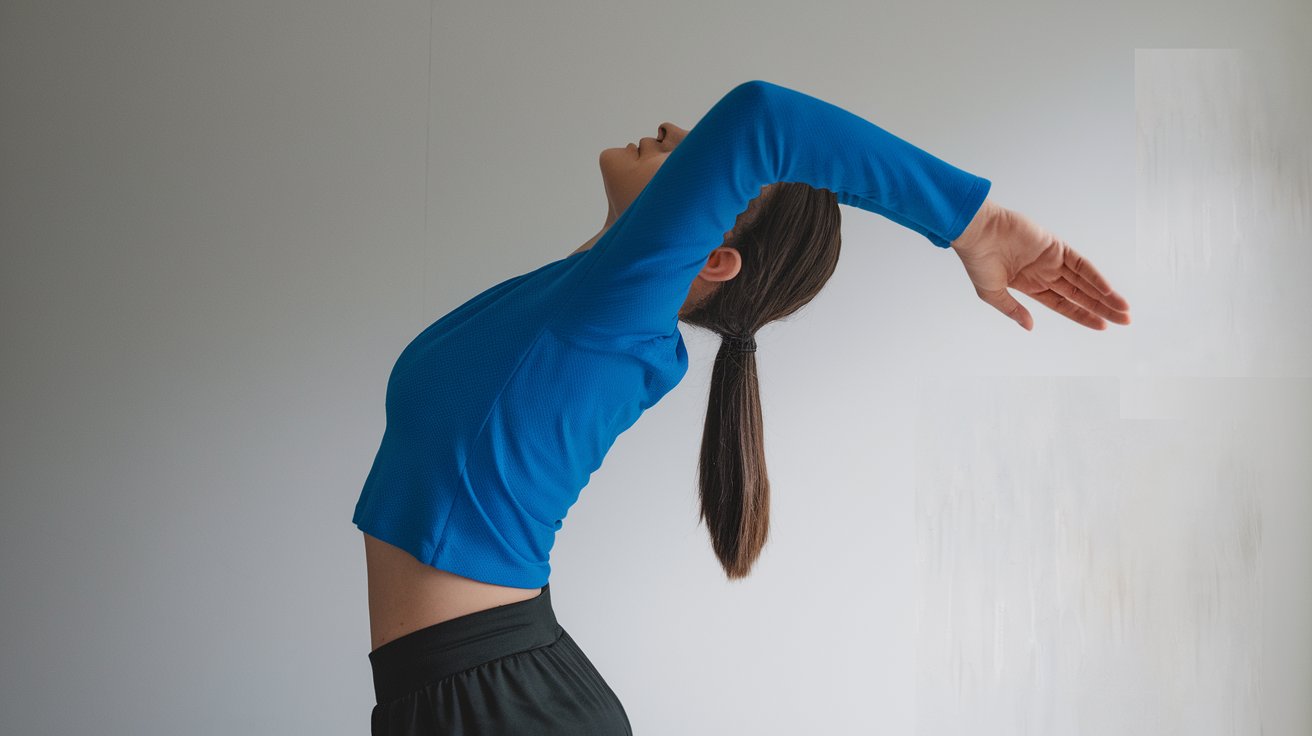
The cat-cow stretch improves spinal flexibility and helps restore natural lumbar and thoracic curves. Start on hands and knees, then alternate between arching your back (cow) and rounding it (cat). Perform 10-15 slow repetitions, focusing on moving one vertebra at a time. This dynamic movement pattern helps counteract the static postures that cause poor posture and is particularly effective when performed multiple times throughout the workday.
Thoracic Spine Rotation
Thoracic spine stiffness is a major contributor to slouching and forward head posture. Lie on your side with knees bent, then rotate your top arm across your body and back, following the movement with your eyes. Hold briefly at each end range and repeat 8-10 times per side. This posture correction exercise specifically targets the mid-back region where much of our postural dysfunction originates.
Hip Flexor and Lower Body Stretches
Tight hip flexors from prolonged sitting create an anterior pelvic tilt that affects your entire postural chain. When your hips are tight, your lower back compensates by over-arching, which then affects your upper back and neck positioning. These lower body stretches to improve posture address the foundation of good alignment.
Hip Flexor Stretch
The hip flexor stretch targets the psoas and rectus femoris muscles that become chronically shortened from sitting. Kneel in a lunge position with your back leg extended, then push your hips forward while keeping your torso upright. Hold for 45-60 seconds per side. This stretch is essential for anyone seeking how to permanently fix posture issues, as tight hip flexors are often the root cause of lower back pain and anterior pelvic tilt.
Pigeon Pose
Pigeon pose provides a deep stretch for the hip flexors, piriformis, and glute muscles while promoting hip mobility. From a tabletop position, bring one knee forward and extend the opposite leg back, then lower down over the front leg. Hold for 60-90 seconds per side. This yoga stretch to improve posture is particularly beneficial for those who experience lower back pain related to hip tightness and pelvic misalignment.
Strengthening Stretches for Postural Support
While passive stretching addresses tight muscles, strengthening stretches simultaneously lengthen and strengthen muscles for optimal postural support. These dynamic movements provide the dual benefit of flexibility and strength, making them highly effective for long-term posture improvement.
Wall Angels
Wall angels strengthen the posterior deltoids and rhomboids while stretching the chest muscles. Stand with your back against a wall and slide your arms up and down in a snow angel motion, keeping contact with the wall. Perform 10-15 repetitions slowly and controlled. This exercise directly counteracts rounded shoulder posture and is considered one of the most effective posture exercises for office workers and students.
Bridge Pose
Bridge pose strengthens the glutes and hamstrings while stretching the hip flexors and chest. Lie on your back with knees bent, then lift your hips while squeezing your glutes. Hold for 15-30 seconds and repeat 5-8 times. This compound movement addresses multiple postural imbalances simultaneously, making it an efficient stretch for posture correction that also builds functional strength.
Daily Stretching Routine for Posture Improvement
Consistency is key when using stretches to improve posture. A structured daily routine ensures you address all major muscle groups while building sustainable habits. The most effective approach combines morning activation stretches, midday desk breaks, and evening restoration stretches for comprehensive postural care.
Your morning routine should include 5-10 minutes of dynamic stretches like cat-cow, arm circles, and gentle spinal twists to prepare your body for the day. During work hours, perform chest stretches and neck releases every 1-2 hours to prevent tension accumulation. Evening sessions should focus on deeper, longer holds to release the day’s stress and prepare your body for restorative sleep.
Common Mistakes to Avoid When Stretching for Posture
Many people make critical errors that can slow progress or even worsen postural problems. The most common mistake is stretching too aggressively, which can trigger protective muscle guarding and reduce effectiveness. Instead, focus on gentle, sustained stretches that allow your nervous system to relax and lengthen muscles naturally.
Another frequent error is neglecting to strengthen weak muscles while stretching tight ones. Simply stretching chest muscles without strengthening the upper back creates temporary relief but doesn’t address the underlying imbalance. The most effective approach combines stretching tight muscles with strengthening exercises for weak opposing muscle groups, creating balanced tension that supports proper alignment.
Stretches for Specific Age Groups and Populations
Stretches to improve posture for seniors require modifications to accommodate reduced mobility and potential joint issues. Focus on gentle, supported stretches performed in chairs or against walls, with emphasis on maintaining range of motion rather than increasing it. Seniors should hold stretches for shorter durations (15-20 seconds) and avoid positions that challenge balance or require getting up and down from the floor.
For office workers and students, emphasize stretches that counteract prolonged sitting and computer use. Prioritize chest openers, hip flexor stretches, and neck releases that can be performed in work clothes without requiring floor space. These populations benefit most from frequent, brief stretching sessions throughout the day rather than one long session.
Measuring Progress and Long-Term Success
Tracking your progress helps maintain motivation and ensures your stretching routine is effective. Take photos from the side view to monitor changes in head position, shoulder alignment, and spinal curves. Many people see noticeable improvements in posture correction within 2-4 weeks of consistent stretching, with significant changes occurring after 8-12 weeks.
Beyond visual changes, monitor functional improvements like reduced neck and back pain, increased energy levels, and improved breathing capacity. Keep a simple log of your daily stretching sessions and note any changes in comfort levels during various activities. Remember that correcting years of bad posture is a gradual process that requires patience and consistency, but the long-term benefits to your health and confidence make the effort worthwhile.
Related video about stretches to improve posture
This video complements the article information with a practical visual demonstration.
Everything you need to know about stretches to improve posture
Can stretching fix bad posture?
Yes, stretching can significantly improve bad posture by addressing muscle imbalances that cause postural dysfunction. Consistent stretching routines targeting tight chest, neck, and hip flexor muscles while strengthening weak postural muscles can restore proper alignment. Research shows that targeted stretching programs can improve postural measurements by 15-25% within 4-6 weeks when performed consistently.
Can you correct years of bad posture?
You can correct years of bad posture through dedicated stretching and strengthening exercises, though it requires patience and consistency. While some improvements may be visible within 2-4 weeks, significantly correcting long-standing postural problems typically takes 3-6 months of regular practice. The key is addressing both tight muscles through stretching and weak muscles through strengthening exercises.
What is the fastest way to improve posture?
The fastest way to improve posture combines daily stretching with postural awareness and strengthening exercises. Focus on chest stretches, hip flexor releases, and upper back strengthening while maintaining conscious awareness of your posture throughout the day. Performing brief stretching sessions every 2 hours during work and a comprehensive 15-20 minute routine daily yields the quickest results.
How to correct slouching posture?
Correct slouching posture by stretching tight chest and neck muscles while strengthening weak upper back muscles. Key exercises include chest door stretches, wall angels, and thoracic spine mobility work. Set reminders to check your posture every hour, adjust your workspace ergonomics, and perform postural exercises 2-3 times daily for optimal results.
| Stretch Type | Primary Target | Key Benefit |
|---|---|---|
| Chest Opener | Pectoralis Major/Minor | Reduces rounded shoulders |
| Hip Flexor Stretch | Psoas and Rectus Femoris | Corrects anterior pelvic tilt |
| Cat-Cow | Spinal Mobility | Improves spinal flexibility |
| Wall Angels | Rhomboids and Rear Delts | Strengthens postural muscles |